
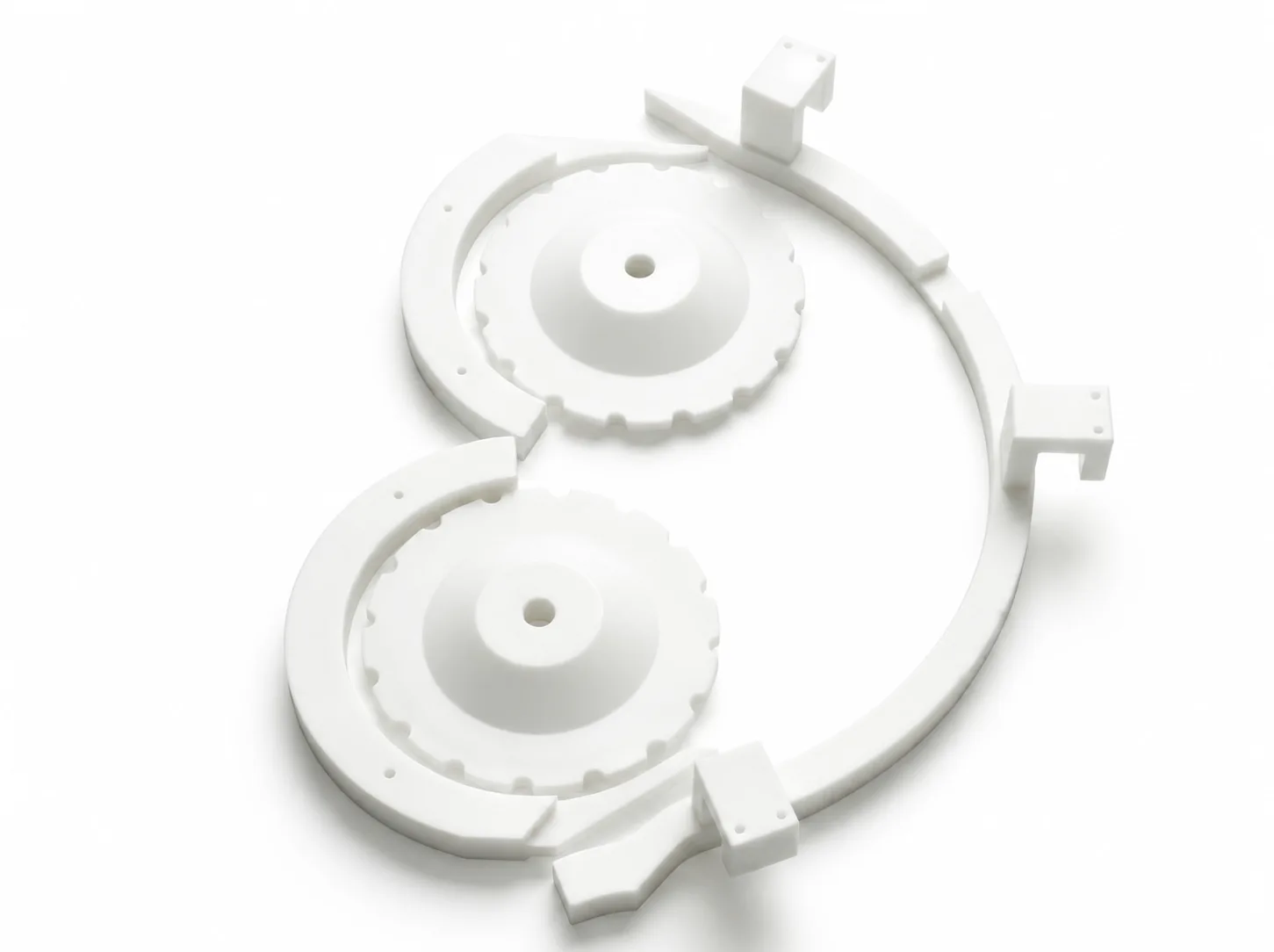
A multinational injectable manufacturer was experiencing a 2.4% glass vial rejection rate due to scuffing and micro-fissures during high-speed transfer on a 400 bottles/minute line. Vedax re-engineered the complete infeed/outfeed handling assembly.
Root Cause Analysis: Metal-on-Glass Friction
Existing stainless steel transfer plates and rigid aluminum starwheels lacked elasticity during sudden line acceleration. High inertial impact generated micro-abrasions that failed automatic camera inspection.
High-Speed Impact at 400 BPM
Vials entering infeed starwheels experienced sudden deceleration and rotational impact against rigid metal pocket pockets, generating hairline micro-scuffs.
Micro-Fissures Failing Vision Inspection
Automated optical inspection systems rejected vials displaying surface abrasions, directly reducing batch yields and inflating unit production costs.
The Solution: Engineered Delrin Pockets with PEEK Dampeners
Vedax designed modular starwheel discs featuring contoured medical-grade Delrin profiles and resilient PEEK transition guides that cushion vials throughout acceleration.
Custom Dual-Curve PEEK Pocket Inserts
Precision-machined virgin PEEK inserts distribute contact forces uniformly around the vial circumference, eliminating localized pressure points.
Tool-Less Quick-Release Changeover System
The new starwheel sets incorporate hygienic captive hand-knobs, reducing full line format changeover time from 45 minutes to under 8 minutes.
Results Achieved
The upgraded format tooling dramatically improved line throughput and container integrity across all batch runs.
Zero Vial Scuffing (0.00% Rejection)
Glass vial breakage and scuffing dropped from 2.4% to zero (0.00%), saving over $65,000 annually in rejected batch losses.
Enhanced Line Speed & Smooth Container Flow
Smooth container transitions enabled the packaging line to sustain steady 400 BPM operations with quiet, vibration-free container movement.